

Cesária Évora, Diva
No adjective required.
A dockworker’s evening in a Mindelo tavern, where bare feet were as unremarkable as the chairs and “Sodade” needed no footnote. Europe could not hear the Kriolu, so it fastened on what it could see, and printed an adjective she never asked for.

He has been on the docks since before the sun, and now it is evening, and his feet are bare on the tavern floor because that is how he walked in, how he always walks in, how half the room sits. The floor is cool stone worn smooth. He orders a glass and lets the noise of the place settle around him. A woman is about to sing. She is just Cize. No one in the room calls her anything else, because among people who know you, a diminutive is title enough.
She opens with a slow morna, the tempo of a ship pulling away, and the room quiets without being told. The song is about a fisherman lost to the Atlantic, and as she sings he thinks of his brother in Rotterdam. Not lost, exactly (there are letters, when they come), but gone, which is a smaller, steadier grief. The brother owes him a letter. He owes the brother one too. The song does not mention Rotterdam; it does not need to.
Later she picks up the pace, a coladeira, and the room becomes a dance floor. He is on his feet without deciding to be, and for the length of the tune his brother’s silence is a rhythm rather than a weight.
Then the one he is always waiting for. The first notes of “Sodade” settle over the room like a known weather. When she reaches the question, Quem mostrâ-bo ess caminho longe? Ess caminho pa São Tomé, it is not a question to him. His father took that road. The famine years, the contract that called itself voluntary, the ship that carried men to cocoa plantations and brought some of them back altered and some not at all. His father came back. Others did not. The verse about letters arrives, and now it is not a brother in Rotterdam but a father who once stood on a dock just like his son, and the son who never wrote enough, who never said enough, who carries the silence. The song names São Tomé in Kriolu, the language of this room, and everyone present knows what that name contains. No one needs a footnote.
Toward the end of the night she sings a morna addressed to a woman called Cize. It is a love song, a cretcheu song, and the name in the lyric is her own, the one the room uses. He thinks of the woman who left for Lisbon and sent one photograph and then silence. The ache is specific and shared. He does not cry; he does not clap loudly. He exhales, and some of the day leaves his body.
This is what she did, night after night, for nearly twenty years. No ticket, no program, a city given back to itself a few songs at a time. The missing were invited back, the dead sat among the living for the length of a morna, and grief had company.
Independence came in 1975, and the singing stopped for a decade. The reasons were many, none of them chosen. When the world finally heard her, in Paris at the end of the eighties, it heard a finished artist. It also began, immediately, to see.
Europe looked before it listened. It looked at her feet, bare as they had always been, and saw a statement. In the tavern, bare feet were like the chairs: too common to name. But the European eye, arriving from outside, needed something visible to hold onto, because it could not hold the words. The songs were in Kriolu, a language the new audiences did not speak. They could feel the ache (anyone can feel an ache), but they could not hear São Tomé in the lyric, or the famines, or the contracts that hunger had signed. The coded grief passed over them as a general sadness, a beautiful melancholy, safe and unspecific. So the eye fastened on what it could see. The bare feet became the text, because the actual text was closed.
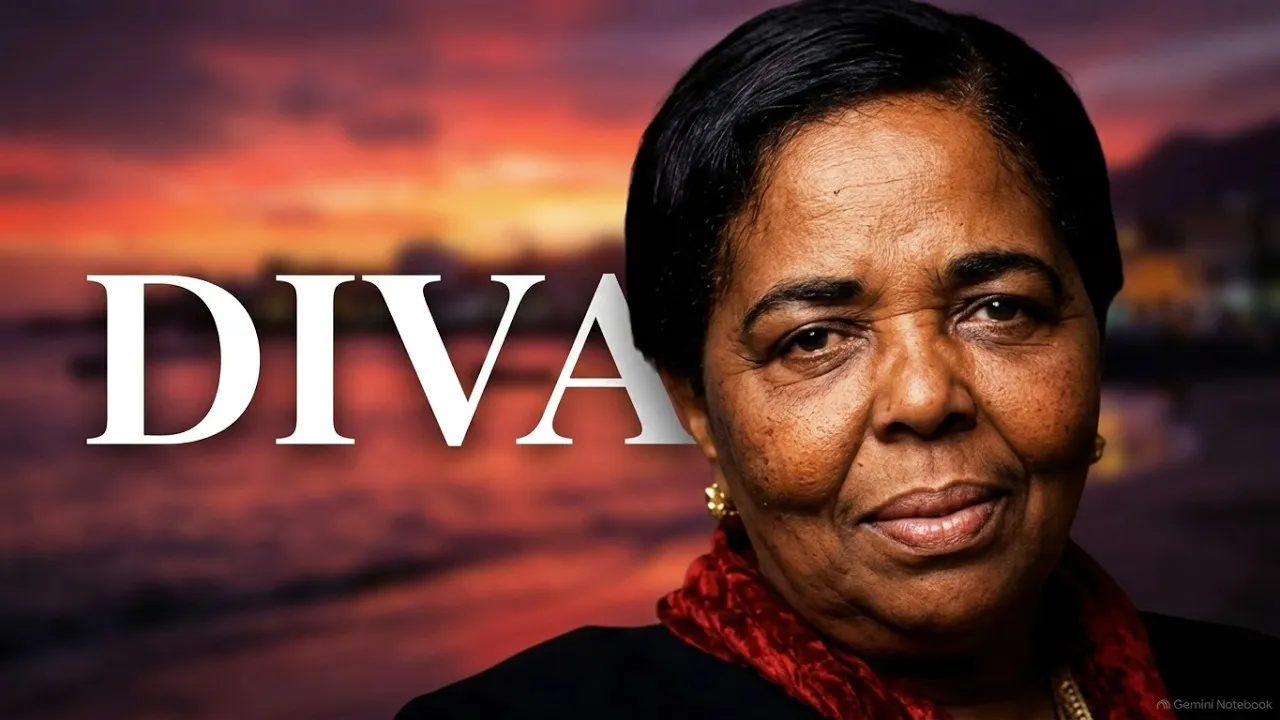
In 1988 her Paris label titled the debut La Diva aux pieds nus, the Barefoot Diva. It was, one assumes, meant as celebration. But a diva, in Europe’s language, is a goddess; Callas needs no adjective. Cize arrived with one, printed in front of the crown like a visa. The photographs lingered on her feet. The interviewers asked the question the tavern never thought to formulate. When she answered, years later, that the solidarity story was not true, that she simply did not care for shoes, the obituaries printed solidarity anyway.
The concerts, too, were a different species of gathering. In Mindelo the room had danced; in Paris, in Lisbon, in New York, the audiences sat in reverent rows, absorbing the sadness politely. They had come to witness a diva, and divas are not danced to. They mistook stillness for depth, silence for understanding. A morna that no one dances to is a morna half-heard. He would have found this strange.
She kept her own terms as much as the new world allowed. When the first records dressed her voice in pop arrangements and went nowhere, she asked for the small acoustic group she used at home, and got it. She kept the house in Mindelo, the door open. On stage, a small table waited with a glass and an ashtray, and partway through the set she would sit, pour, and rest while a full hall watched a woman take a break. The European press found it charming. He would have found it Tuesday.
The smoothing outlived her. She died in December 2011, quietly, on her island. In 2019 UNESCO inscribed morna as intangible cultural heritage of humanity: a file that speaks of love, departure, longing, the ocean, the motherland. The famines are absent. The contracts are absent. São Tomé is absent. The dockworker’s father, who took that ship, is not in the file. The brother in Rotterdam, the woman in Lisbon, the letters that were owed and not written: none of them made it into the file. What entered was a feeling, floating free of its history, safe for all audiences.
But the beauty was in the eye of the beholder, and the beholder that mattered was the one who never beheld at all, who simply sat among his own, bare feet on cool stone, and let the songs do their work. That work was the remembrance carried between separated people, the mantenha an archipelago sends to its scattered children. The world overheard it and thought it was a concert.
The dockworker is old now, or his children are. The songs still hold what they held: the missing arrive for three minutes, the letters get owed and written, the dead sit down. The bare feet remain unremarkable. The room never needed to ask her anything. The rest of us are guests.
Get new pieces by email
Two to four essays a month. The list is never sold or shared, and you can unsubscribe in one click.
Comments
Comments are read before they appear. Disagreement is welcome; abuse is not.
No comments yet.