

The Case Against “Restitution”
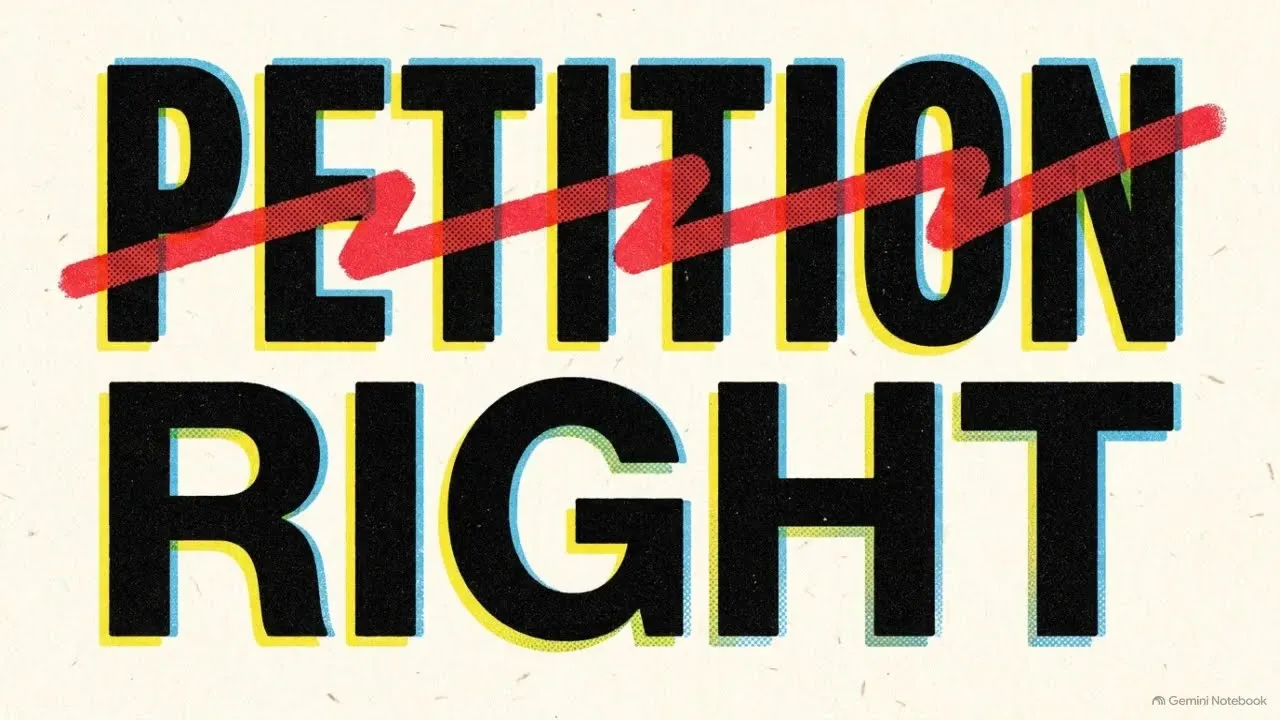
A brief against petitioning.
In 2022 Belgium handed the Kakuungu mask back to Congo as an indefinite loan, because its own law forbids giving anything away. The same three principles that keep it in Brussels are available to any African statute book willing to claim them. Stop asking; declare.

No self-respecting nation begs a thief to return its heritage. Yet African governments keep doing exactly that. They champion “restitution,” and in the process adopt the rulebook he wrote.
Consider Belgium’s 2022 ceremony. King Philippe handed the Kakuungu mask of the Suku people to the Democratic Republic of the Congo. It was not a return. It was an indefinite loan. Belgian law made anything else impossible: federal collections cannot be given away. The palace reached for the only available word, and the word performed its designed function. Brussels remained the owner of record. Kinshasa became a custodian of its own ancestors, on Belgian sufferance.
“Restitution” frames the former empire as the rightful owner who might, out of enlightened generosity, bestow a favor. Ask nicely enough, for long enough, and a few pieces may come back.
The frame holds because Europe long ago built a legal fortress around its own patrimony. Three principles do the work.
Inalienable. Once an object enters the French or Belgian public domain, no official and no museum can sell it or give it away. The state’s title is absolute. The principle dates to the Edict of Moulins in 1566, three centuries before the sack of Abomey.
Imprescriptible. The state’s ownership never expires. If a public object goes missing, the state can reclaim it without time limit. In 2022, France’s highest administrative court ruled on a medieval manuscript that a family had bought at public auction in 1901 and held in good faith for one hundred and seventeen years. The manuscript, the court held, had never ceased to belong to the public domain. The family could be compensated for its lost enjoyment, never for the property, because the property was never theirs.
Unseizable. Creditors cannot touch these objects, whatever the public debt.
When a seized African object entered a French or Belgian collection, a quiet alchemy occurred: the object became part of the fortress. From that moment the burden shifted. The holding state no longer needed to defend the original taking; the challenger had to attack a finished product of European property law.
It is a machine, and it chewed up its own most celebrated challenger. In 2018 Macron ordered the most publicized restitution document in history: the Sarr-Savoy report, recommending full and permanent return of African heritage taken without consent. It carried global praise and the strongest hand the petition model will ever hold. Whatever its authors intended, the report yielded twenty-six objects to Benin, released through a one-time statute drafted as a named exception, out of collections built on tens of thousands. Inalienability stood untouched, and Savoy herself ended up describing an administration multiplying tactics to smother the debate it had commissioned. That is restitution functioning, not failing. Making a people petition for its ancestors, praising the petition, and keeping the ancestors has a name: humiliation.
Nor does its legality settle anything. Colonial rule was once legal under European public law; resistance was frequently illegal under the same systems. No one treats that as a reason to question African independence. A legal order that denied a people the right to govern themselves cannot be the sole arbiter of whether their gods, their kings, and their dead were lawfully taken. The same answer that nullified colonial sovereignty nullifies the colonial title to the objects.
Every petition ratifies the fortress. The alternative is to refuse the premise. African states need a different vocabulary, and it already exists: the tripod Europe stands on, inalienability, imprescriptibility, unseizability, grounded this time in the law of the source communities at the moment of the taking. The claim is a status, not a request.
Originally inalienable. Incapable of lawful transfer, so no subsequent transaction could cure the defect.
Originally imprescriptible. No clock ever started running against a title that never moved.
Originally unseizable. Beyond the reach of anyone’s creditors, a protection the DRC, hunted for years by vulture funds, needs no lecture on.
Same rules, earlier date.
This is not only a litigation argument; it is a constitutional act. Imagine the Democratic Republic of the Congo writing the tripod into its heritage code, covering everything removed during the colonial period. The mask under Congolese law, the throne under Beninese law, the bronze under Nigerian law: none of them ever left the sovereign domain.
An African government no longer enters a diplomatic meeting or a UNESCO forum and says, “We request the restitution of our heritage.” It says, “Under our law, these objects are and have always been inalienably ours. Your possession is unlawful. Let us discuss the modalities of their return.”
It changes the story a nation tells itself, too. When a Congolese child sees the Kakuungu mask in a textbook, she learns that it was never on loan from a Belgian king. It belongs to her people, therefore to her, and after her to her children, and it falls to her to reclaim it. Generations ago her ancestors fought and won decolonization; decoloniality is the longer fight, and it passes to her with the title.
Adding a law to a statute book will not make the objects reappear in Kinshasa or Cotonou, and it will not force a French museum to open its vaults. What it will do is set up a bigger, more honest conflict: a conflict of laws, a conflict of sovereignties. The wrong conflict was pleading in the defendant’s own courtroom, hoping to win a few objects case by case. The right one is France declaring the Abomey throne untouchable because of the Edict of Moulins while Benin declares it untouchable because it was never alienable under Dahomean law.
A declared status is also a lever. Museums holding disputed objects face pressure to run provenance audits ahead of lawsuits rather than after them. Insurers begin pricing the risk of holding stolen property. Lenders demand anti-seizure guarantees before anything crosses a border. Western museum boards must explain to their own public why they keep objects a sovereign state has formally defined as stolen patrimony. None of this requires winning a single case in a European court; exposure alone changes behavior.
And when lawsuits do come (most usefully in the United States, where courts have lifted foreign-state immunity over property taken in violation of international law once the possessor does business in America), the declaration has already prepared the ground. The nemo dat principle applies: no one can sell what they do not own, and no individual chief or intermediary held authority to sell communal, ceremonial property. The Abomey throne, taken as war booty from a sovereign state at war with France, fails under the very international law European powers wrote for themselves. And the notorious defense that colonial victims were “their own nationals,” their dispossession an internal affair? The empires held their colonized as subjects for the purpose of rule and refused them citizenship for every other purpose. They cannot now confer nationality retroactively for the sole purpose of barring people from the courtroom.
But the tools are secondary. The claim was born the moment an African nation looked at the thief’s rulebook, stopped asking for a page, and wrote its own.
This is not a roadmap for quick victories. A rights claim reads as a threat, and threatened governments do not reliably concede: they litigate, delay, fund the defense, wait out the news cycle. Better law does not guarantee faster return. It only guarantees that when the object finally moves, everyone understands why it had to.
Reclamation does not begin in European parliaments. It begins with a sovereign people declaring, in their own law, that their gods, their kings, and their dead were never anyone else’s to hold.
Get new pieces by email
Two to four essays a month. The list is never sold or shared, and you can unsubscribe in one click.
Comments
Comments are read before they appear. Disagreement is welcome; abuse is not.
No comments yet.